From Modern Workplace to Smart Workplace Automation: FLOWSTER and JAEMACOM at WBM
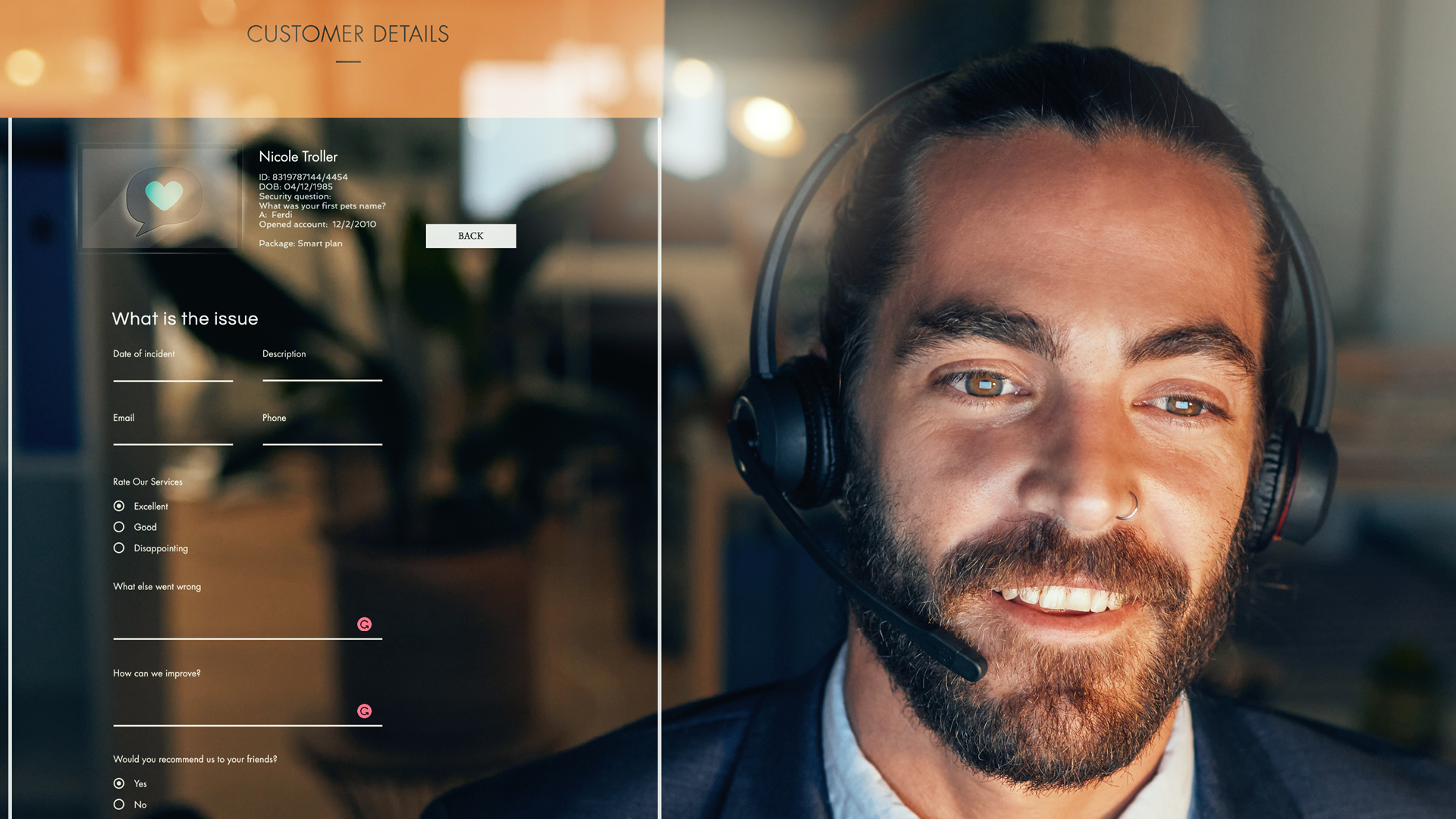
When central IT control reaches the employee’s workplace. A use case that shows how IT automation can be thought through to the end – consistently.
Shaping Berlin – digitally too
WBM Wohnungsbaugesellschaft Berlin-Mitte mbH is one of Berlin’s six state-owned housing companies and far more than a real estate operator. Around 85,000 Berliners from more than 100 nations live in approximately 35,000 rental apartments. By 2034, WBM will invest 3.3 billion euros in new construction and refurbishment – with the clear ambition of making Berlin socially fair, climate-neutral and liveable. A company of this size needs an IT that can keep up.
A long-standing partnership
Both JAEMACOM and FLOWSTER have been supporting WBM as reliable partners for many years. The collaboration began with building a solid IT infrastructure and is still being developed jointly today: technologically, organizationally and very practically in WBM’s daily work.
Step 1: The foundation – a modern workplace for more than 1,000 endpoints
It all started in 2011 with the requirement to centrally manage, better secure and more efficiently use more than 1,000 endpoints. More secure through better protection against security leaks and more efficient through automated patching, license management and software distribution. JAEMACOM created the foundation by building a modern workplace that offers maximum convenience for users and significantly simplifies the work of WBM’s internal IT.
The focus areas:
- Central management of all endpoints: monitoring, configuration, updates and security from a single source
- Automated provisioning of updates and patches and significant acceleration of rollout processes
- Increased productivity through user-friendly, cloud-based solutions
- Reduction of IT support effort by up to 30 %
- Quick adaptation to changing ways of working
The project is being continuously developed by JAEMACOM, FLOWSTER and WBM and now forms the foundation for further digital transformation.
Step 2: Automation grows along – FLOWSTER in use at WBM
Just under a year later, FLOWSTER came into play to automate central and decisive IT processes. Effectively the foundation of WBM’s digitalization.
This includes, among other things, self-service processes for business units, automated data exports, supporting workflows around WBM’s ERP system as well as the processing and provisioning of documents.
Automation has long since taken hold in first-level support too: when resetting system passwords, unlocking accounts, granting temporary admin permissions and handling time-consuming specialist processes.
At WBM, automation is not a vision. It is everyday reality.
Step 3: When automation reaches people exactly at the right moment
Every second counts in inbound customer service. When a call comes in, the customer advisor needs to identify as quickly as possible who is calling, what it might be about and which previous correspondence already exists.
The central requirement was therefore:
While the Teams call is still ringing, an information window should automatically open in the called advisor’s Citrix session. This window should display the caller’s identity as well as the previous communication.
The starting situation at WBM:
Customer advisors are called via Microsoft Teams on their local laptop client. The actual work, however, takes place in an open Citrix session. This is exactly where the relevant business applications and work processes reside.
The goal was a tangible relief for the advisor and at the same time a better service experience for the tenant. Because when the advisor picks up the call, they are already prepared.
The technical solution: the FLOWSTER Client Agent as the link between backend and workplace
With the FLOWSTER Client Agent, FLOWSTER extends central automation right down to the workplace of the individual customer advisor. The agent runs on the terminal servers in the user context and can execute actions directly within the active session.
It can, for example, create files, start programs, run scripts or open prepared content in the browser. This makes it the decisive component when automation should not only happen in the backend, but become visible to the right employee.
At WBM, exactly this capability is used.
As soon as a call comes in via Microsoft Teams, a webhook is triggered through a Teams extension. It contains the caller’s phone number and the username of the called advisor. Through the interface to FLOWSTER Studio, this starts a workflow.
This workflow queries WBM’s ERP system in the backend to find out which person the phone number belongs to and which stored communication exists. The relevant information is extracted from the database, prepared and converted into an HTML table.
FLOWSTER Studio then sends a message to an MQTT broker. As soon as the message arrives, the Client Agent in the advisor’s terminal server session receives the command in real time to save the prepared HTML code as a file and immediately open it in the browser.
The entire process only takes a few seconds. As a rule, the call has not even been answered at this point.
Your use case is waiting
What is long-standing practice at WBM can be transferred to many IT environments. If you would like to know what potential is dormant in your IT infrastructure, we would be happy to talk to you.